The Fed Just Raised Rates. Here's What Usually Happens Next
The Fed raised rates this week and signaled more hikes ahead. History says the market usually dips about 4 percent in the first six weeks after a first hike, then tends to heal over the following year, though the inflation-fighting cycle of 2022 was a painful exception. The move is not to panic. It is to be patient, know which corners of the market tend to hold up, and understand that the real inflation pressure right now is diesel, not the Fed. Here is how I would think about it.
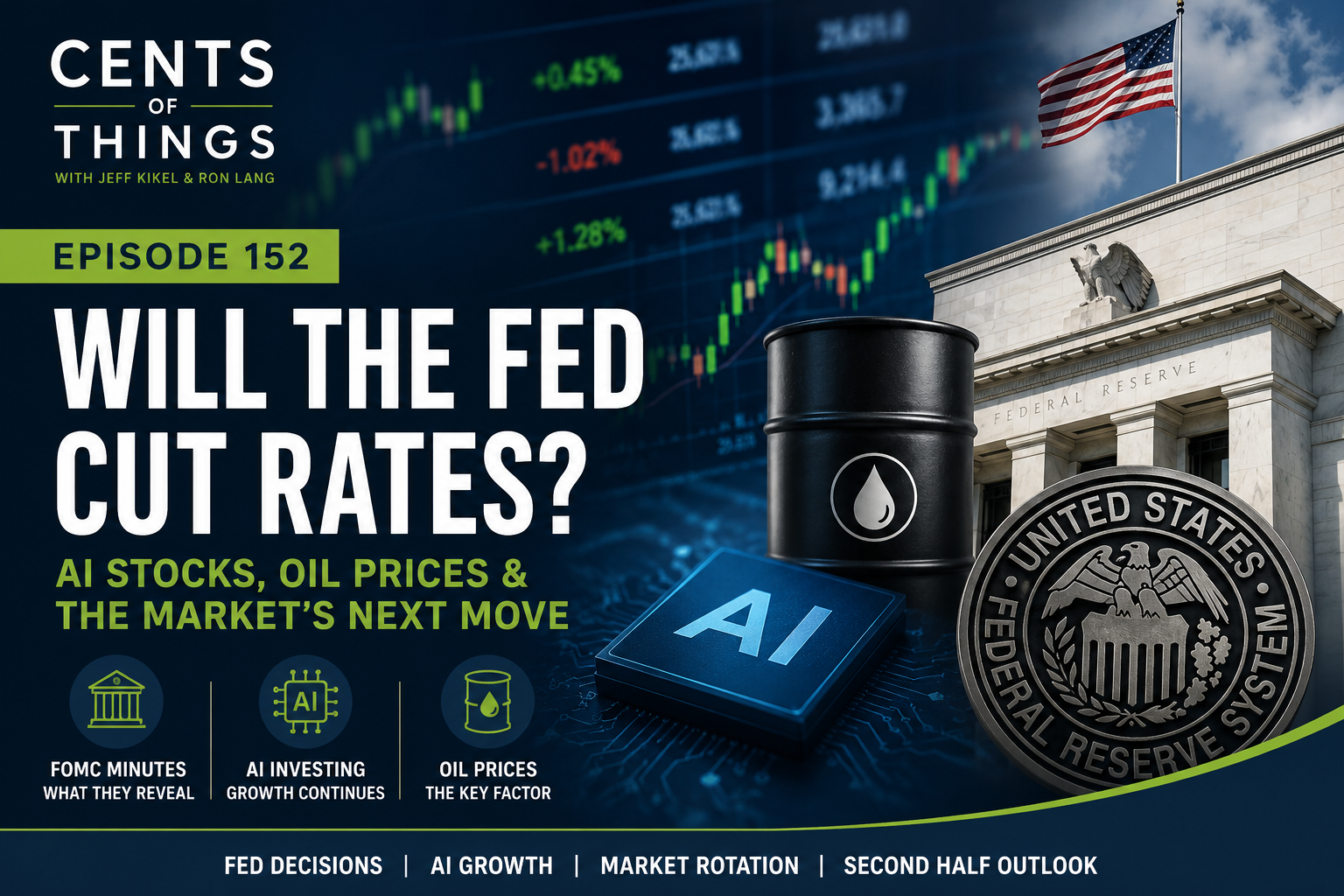
Ron and I taped this the day after the Fed meeting, and the question I kept getting all week was simple: what does this rate hike mean for my money? So we spent the show pulling apart the history, the earnings picture, and the one input that is quietly driving prices more than anything the Fed does. Let me walk you through it.
What does the market usually do after a Fed rate hike?
Here is the pattern worth keeping in your back pocket. On average, the S&P 500 tends to pull back about 4 percent over the first six weeks after a first rate hike. Then it usually heals. About six months out, the market has historically been up roughly 4 percent, and a year later it has averaged something like 9 to 10 percent higher. In other words, the initial flinch is normal, and the longer arc has tended to favor patient investors.
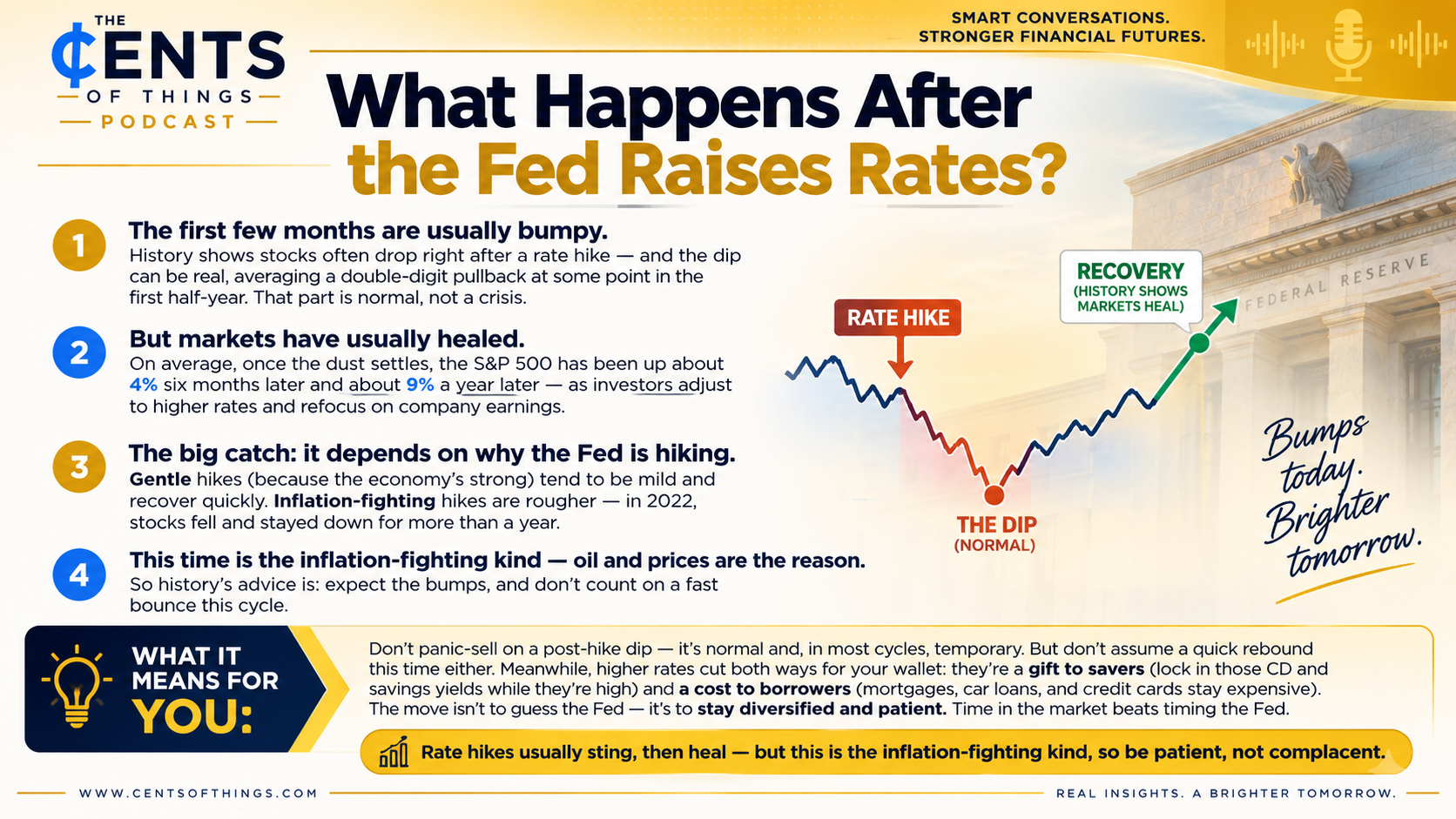
But averages hide the exceptions, and one is big. In 2022, the Fed launched an aggressive inflation-fighting tightening cycle, and a year later the market was still down. That is the version of a hike that stings, and it is the one I am watching for here, because this Fed also looks determined to force inflation back to 2 percent, and we still have oil prices and a stubborn long end of the yield curve to contend with. So this is not a moment to panic and sell, but it is a moment to be a little more patient than usual.
Which sectors hold up best when rates rise?
This surprises people, so it is worth saying plainly. Historically, the two sectors that perform best in a rate-hike environment are energy and information technology. Energy makes intuitive sense right now with oil prices firm. Technology is the counterintuitive one, because every time rates tick up you hear that tech is supposed to fall, and yet over full hiking cycles it has often been among the leaders.
The two weakest performers have tended to be consumer discretionary and financials. And let me bust a myth on the financials, because I hear it every cycle: people assume higher rates automatically mean fatter net interest margins for banks. It usually works the other way. Loan volume slows, and banks often end up among the worst performers heading into a rate rise. Knowing that keeps you from chasing the popular but wrong trade.
Why is inflation still sticky? In a word, diesel
Here is the part I think gets missed. Much of the current inflation isn't broad-based demand; it is fuel. Diesel is over $6 in Texas and was spotted near $9 in California, and diesel touches the price of almost everything that moves by truck. The bigger story behind it is global. Russia is the world's primary diesel supplier, Ukraine has been striking Russian oil fields and pipelines, and the world, including the United States, simply doesn't have enough refining capacity to fill the gap.
So this is not really an Iran story, and a rate hike can't fix it. You can tighten policy all you want, but it will not refine another barrel of diesel. That is why I have said it is tough to squeeze this kind of fuel-driven, supply-side inflation with interest rates alone. It is worth understanding, because it tells you this inflation bump is more about a war and a refining bottleneck than about a runaway economy.
Is there any good news in here?
Plenty, actually. This earnings season was strong across the board. Almost 88 percent of the S&P 500, better than 425 of the 500 companies, beat their earnings estimates. That is not just the mega-cap names carrying the index either. To me it is a sign that AI is starting to show up in the real numbers, lifting productivity and profitability across a much wider set of companies. Strong, broad earnings are exactly the kind of foundation that helps a market absorb a rate hike and still put together a decent fourth quarter.
When will we actually feel this hike?
Not right away, and that is important. A Fed rate change historically takes about nine months to work its way through the real economy. The stock market, on the other hand, tends to look about six months ahead, which is why you get that initial shock followed by the market pricing in what it expects down the road. Put those together, and the practical effect of this hike may not really land until next summer. So don't expect an overnight change in your daily life, and don't let the headlines convince you the sky is falling this week.
So what does this mean for a long-term investor?
A few plain thoughts. First, do not panic-sell into a rate hike, because history says the first few weeks are usually the worst of it, and patience tends to pay. Second, respect the calendar: September and October are historically weak, more so in a midterm year, so brace for a choppy few weeks. Third, if you are going to lean anywhere, the historical playbook favors energy and technology over consumer discretionary and financials. And fourth, keep your eye on diesel and the long end of rates rather than every Fed sound bite, because that is where the real pressure is.
As I tell my clients, the goal is not to predict the next move. It is to stay invested, stay diversified, and make sure you are being paid fairly for the risk you take. None of the above is a recommendation for your particular situation, it is simply how I am reading the week.
Frequently asked questions
What does the stock market usually do after the Fed raises rates?
On average, the S&P 500 has pulled back about 4 percent in the first six weeks after a first hike, then recovered to roughly 4 percent up at six months and 9 to 10 percent up a year later. The aggressive 2022 tightening was an exception, with the market still down twelve months out.
Which sectors do best when interest rates rise?
Historically, energy and information technology have been the strongest, while consumer discretionary and financials have lagged. The idea that banks automatically earn more when rates rise is largely a myth, since loan volume tends to slow.
Why is inflation still high?
A big piece of it right now is diesel, which is over 6 dollars in some states. Russia is the world's main diesel supplier, Ukraine has been hitting Russian oil infrastructure, and global refining capacity is tight. That is supply-side, fuel-driven pressure that rate hikes do not easily fix.
When will the rate hike actually affect the economy?
Historically, it takes about nine months for a rate change to work through the economy, while the stock market tends to look roughly six months ahead. The real effects of this hike may not be felt until next summer.
Should I sell stocks because rates are rising?
History argues against panic. The first few weeks after a hike are usually the roughest, and patient investors have tended to be rewarded over the following year. Your own timeline and needs should drive the decision.
The Bottom Line
The Fed raised rates and hinted at more, and if history is any guide, the market may wobble for a few weeks before healing over the following year, with 2022 standing as the cautionary exception. Lean on what tends to work, energy and technology over discretionary and financials, remember that the real inflation pressure is diesel rather than demand, and know that the true economic effects are about nine months away. None of that is a reason to run. Stay patient, stay diversified, and keep your head. If you want this kind of plain-English read on the market every week, subscribe to The Cents of Things.
Source: per The Cents of Things market review recorded September 17, 2026, historical averages show roughly a 4 percent S&P 500 pullback in the six weeks after a first Fed rate hike and about 9 to 10 percent higher a year later, while nearly 88 percent of the S&P 500 beat earnings estimates and diesel traded above 6 dollars a gallon.
About the author
Jeff Kikel is a 30-year financial professional and the founder of Freedom Day Wealth Management, a fee-based wealth and retirement planning firm, and Profit Pilot Tax and Financial Services, a tax strategy and business-exit practice. He helps business owners and high earners build wealth, exit their businesses well, and retire on their own terms. Want help applying any of this to your own plan? Reach Jeff through Freedom Day Wealth Management at www.FreedomDayWealth.com or Profit Pilot at www.ProfitPilotTax.com.
This is for education only and is not investment, tax, or legal advice.